

AI Has Been in Education for Decades
There is a common assumption circulating in educational circles, in staff rooms, at conferences, and across social media, that artificial intelligence arrived in education with the launch of ChatGPT in November 2022. For many teachers and trainers, that moment felt like a sudden rupture, a before and after. The reality, however, is considerably more complicated, and considerably more interesting. AI has been present in education in various forms for well over sixty years, and the current fixation on generative AI risks obscuring a much richer and more instructive history. A recent piece on Substack by Nick Potkalitsky, titled “If Testing […]

Navigating the Rise of AI Agents in Education
The conversation around artificial intelligence in education is rapidly evolving. While much of the initial focus has been on generative AI tools that respond to prompts, a new frontier is emerging with the rise of agentic AI. These are systems that can not only answer questions but also plan, act, and learn to achieve goals with minimal human intervention. A recent workshop held by Jisc in the UK for their AI staff brought this topic into sharp focus, and it is clear that the implications for education and training institutions across Europe are profound and demand urgent attention. The Jisc […]

Where is the Indie Tech? A European Quest for Digital Sovereignty
A recent exchange on the topic of digital literacy sparked a question that cuts to the heart of Europe’s relationship with technology. It began with a comment on Cristina Costa’s article, “Misplaced accountability: Why should young people be made to pay for the problems Big Tech create?” [1], which rightly challenges the narrative that places the burden of online safety on young people and their parents, while technology companies remain largely unaccountable. In response to my agreement, Cristina posed a further question: “Where’s the indie tech that we saw at the beginning of the WWW? It has been absorbed, silenced […]

Beyond the Mismatch: A Critical Look at Europe’s ‘Human-Centred’ Digital Future
The discourse surrounding the future of work in Europe has a new landmark with the release of Cedefop’s latest working paper, “Human-centred digital transitions and skill mismatches in European workplaces” [1]. Drawing on the comprehensive second European Skills and Jobs Survey (ESJS2), the report offers a data-rich, panoramic view of a continent grappling with the accelerating pace of digitalisation. It is an essential read for any educator, trainer, or policymaker. However, a critical analysis reveals that while the report provides invaluable data, its underlying framework and the very language of a “human-centred” transition warrant a deeper, more questioning look. The […]

AI Degrees: A Gold Rush for Skills or a Curriculum problem?
The rapid ascent of Artificial Intelligence from a niche technical field to a pervasive societal force has triggered a predictable response from higher education. Across the UK and Europe, universities are scrambling to offer programmes in AI, responding to soaring student demand and the promise of a lucrative job market. Data from the UK’s Higher Education Statistics Agency (Hesa) reveals a dramatic surge, with the number of students enrolled in AI courses trebling since 2019-20 to reach 10,825 in the 2024-25 academic year [1]. This represents a 19 per cent increase in a single year, making it one of the […]

The kids aren’t alright
In a recent Substack post, Jared Cooney Horvath unpacks […]

Why should young people pay for the sins of the big tech bros
Cristina Costa has published an excellent article on the Digital Literacies Network website: Misplaced accountability: Why should young people be made to pay for the problems Big Tech create? With the growing spread of proposed measures to ban young people under the age of 16 from social media, she asks what underpins these recomendations that claim to safeguard young people’s well being. And do the bans really guarantee digital welfare? A recent Guardian newspaper follow up on earlier interviews with young people in Australia, which was the first country to introduce such a ban and draws doubt to its effectiveness […]
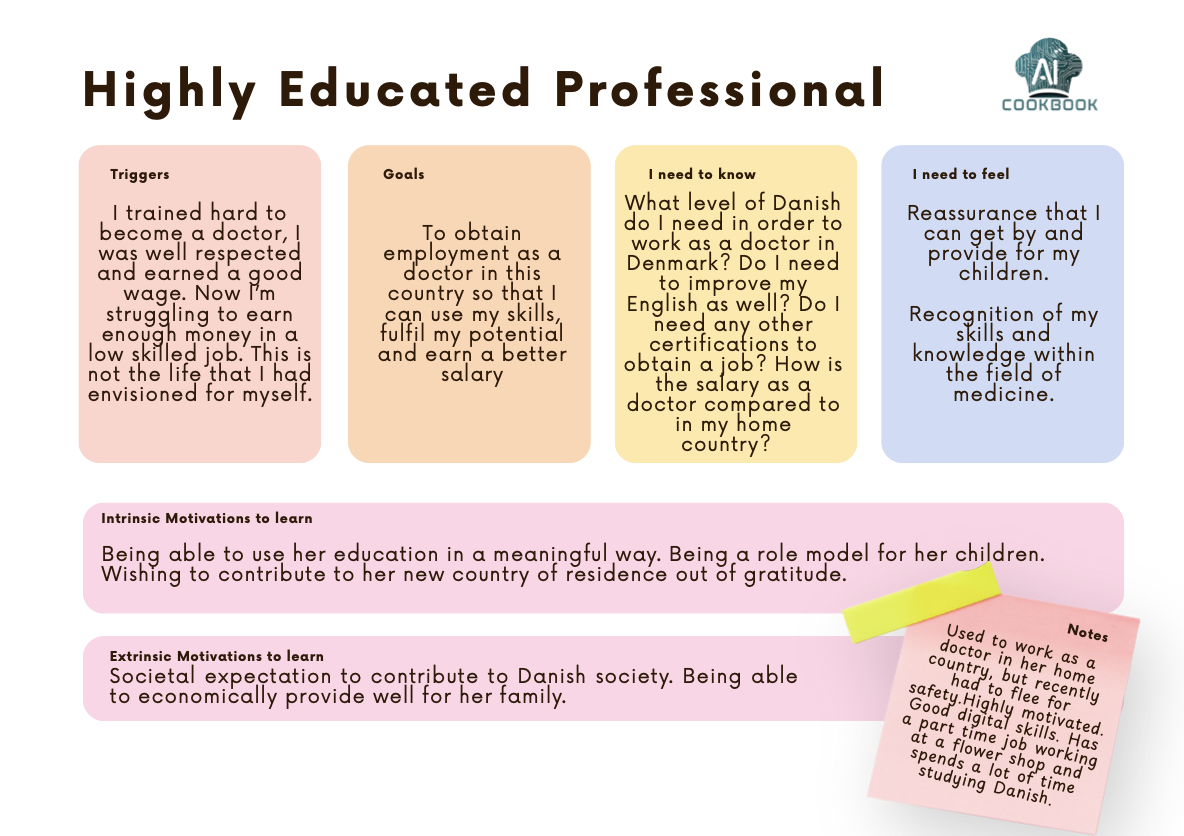
A Persona-Driven Approach to Skills for Migrant Learners
This week the AI Cookbook team met in Athens […]